← Home · Ground improvement

Precision Vibrocompaction Design in Birmingham Alabama

Together, we solve the challenges of tomorrow.

LEARN MORE →

Birmingham sits in the Jones Valley at roughly 600 feet above sea level. That valley floor is riddled with loose alluvial sands and old mine tailings. Standard compaction won't cut it here. You need a vibrocompaction design that accounts for variable fill, high water table in the Cahaba basin, and the residual soils from the Appalachian foothills. The 2003 Alabama earthquake was only a magnitude 4.6. It still cracked foundations in Mountain Brook. We design vibro programs that densify the critical zone before problems start. Our plans tie directly to SPT drilling verification logs so every lift of improved ground is documented.

A 10-foot lift of loose sand in Homewood can densify to 85% relative density in under an hour with the right probe pattern and water flow.
Our approach and scope

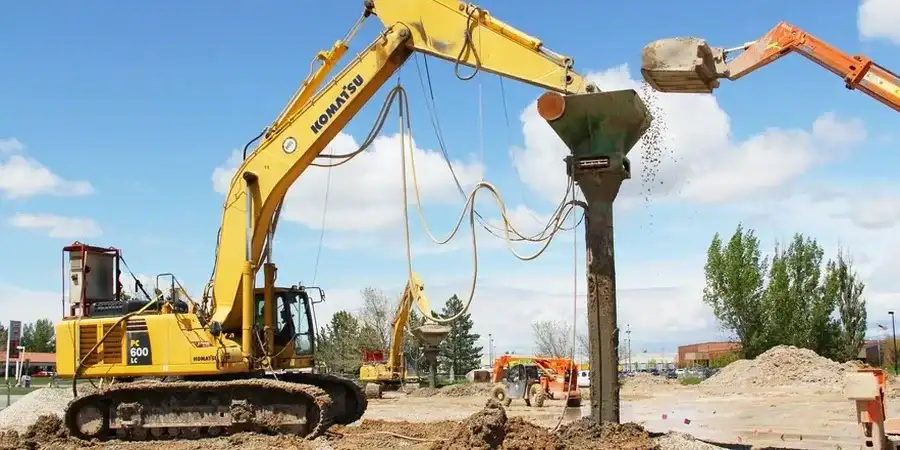
The vibrator itself is a 130 kW electric unit with a 15-inch diameter probe. It hits 1800 rpm at the eccentric weight. That delivers 30 to 50 tons of centrifugal force straight into the ground. In Birmingham's silty sands we often add water jets at 80 psi to help the probe penetrate. The grid spacing comes from your SPT N-values. If N is under 10, we tighten the pattern to 6 feet on center. If it's 10 to 20, we open it to 8 feet. Each probe point gets multiple passes until the ammeter reading spikes and holds steady. That's the refusal criterion. We don't guess. We read the power draw in real time and adjust on the fly.
Precision Vibrocompaction Design in Birmingham Alabama
Technical reference image — Birmingham Alabama

Local ground factors

Before the steel mills arrived, Birmingham was just a railroad crossing. The rapid industrial build-out left a patchwork of uncontrolled fill all over the central city. That fill contains slag, ash, brick, and loose sand dumped without compaction. When a developer buys a lot in Avondale or Woodlawn, the geotech report almost always shows N-values below 5. Build on that without treatment and you get differential settlement. Floor slabs crack. Utilities shear. The fix costs triple after construction. Our vibrocompaction designs target those fill zones directly. We map the fill thickness with borings, then specify probe depth, spacing, and passes to reach 80% relative density throughout the column.

Need a geotechnical assessment?

Reply within 24h.

Email: contact@geotechnical-engineering.xyz

Typical values

ParameterTypical value
Target relative density (Dr)70% to 85%
Probe power130 kW electric
Grid spacing (N<10)6 ft triangular
Grid spacing (N 10-20)8 ft triangular
Water jet pressure80 to 120 psi
Amperage refusal criterionSteady max draw
Post-treatment verificationSPT and CPT

Related technical services

01

Site-Specific Vibrocompaction Plans

Full design package with grid layout, probe depth matrix, water flow rates, and pass sequences based on your geotechnical report and structural load requirements.

02

Post-Treatment Verification Testing

SPT and CPT testing after compaction to confirm relative density targets. We compare before-and-after N-values and deliver a stamped compliance report for the building department.

03

Construction-Phase Monitoring

On-site supervision during vibro work. We track ammeter logs, penetration rates, and water pressure at each point and adjust the design in real time if subsurface conditions change.

Reference standards

ASTM D1586-18 Standard Test Method for SPT, ASCE 7-22 Minimum Design Loads, IBC 2021 Chapter 18 Soils and Foundations

Common questions

How much does a vibrocompaction design cost for a Birmingham site?
How deep can vibrocompaction reach in Birmingham soils?

The probe typically reaches 40 to 60 feet in the loose sands and fill common to the Jones Valley. Depth depends on soil resistance and groundwater level. We specify the target depth based on your boring logs.

What soil types respond well to vibrocompaction?

Clean sands and silty sands with less than 15% fines compact best. The method does not work in clays or organic soils. We run grain-size analyses first to confirm suitability before designing the grid.

How long does the design process take?

A standard design with existing geotechnical data takes 5 to 7 business days. If new borings are required, add 2 to 3 weeks for drilling and lab testing before the design phase starts.

Location and service area

We serve projects across Birmingham Alabama and surrounding areas.

View larger map