Together, we solve the challenges of tomorrow.
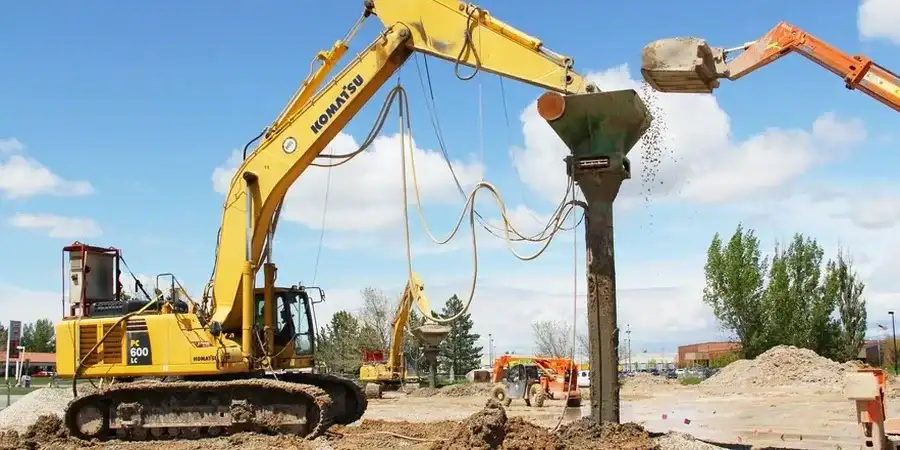
LEARN MORE →Ground improvement encompasses a suite of geotechnical engineering techniques designed to enhance the physical and mechanical properties of soil and rock to safely support structures, pavements, and infrastructure. In Birmingham, Alabama, this discipline is critical due to the region's complex subsurface conditions, which often include residual soils, karst features, and variable bedrock depth. The city's ongoing urban revitalization, industrial expansion, and transportation upgrades demand reliable foundations that can withstand both structural loads and environmental factors. From stabilizing soft clays beneath commercial developments to mitigating sinkhole risk under roadways, ground improvement provides cost-effective alternatives to deep foundations, reducing excavation, material transport, and construction time. Local engineers routinely integrate methods like stone column design and vibrocompaction design to meet performance criteria while adapting to Birmingham's unique geology.
Birmingham sits within the Valley and Ridge physiographic province, characterized by folded and faulted sedimentary rocks including limestone, dolomite, shale, and sandstone. The weathering of these formations has produced thick deposits of silty clays and sandy silts, often with variable consistency and susceptibility to shrink-swell behavior. More critically, the underlying carbonate rocks are prone to dissolution, creating karst terrain with voids, caves, and sinkholes that pose significant geohazards. The Cahaba and Shades Mountain areas exhibit colluvial soils and steep slopes where erosion and shallow landslides can occur. These conditions make it essential to assess not just bearing capacity and settlement, but also long-term durability against moisture changes and potential ground collapse. Ground improvement strategies must address these layered risks, often combining techniques to densify loose zones, reinforce soft pockets, and bridge subsurface voids.
The regulatory framework governing ground improvement in Birmingham is primarily derived from the International Building Code (IBC) as adopted by the State of Alabama and enforced locally through the City of Birmingham's Department of Planning, Engineering and Permits. Geotechnical investigations must comply with ASTM standards and Alabama Department of Transportation (ALDOT) specifications for public projects. The Alabama Board of Licensure for Professional Engineers and Land Surveyors requires that all ground improvement designs be sealed by a licensed professional engineer with demonstrated competence in geotechnical engineering. For sites within karst-prone areas, the Alabama Department of Environmental Management (ADEM) may require additional assessments under the Alabama Water Pollution Control Act if groundwater is impacted. These regulations mandate thorough subsurface exploration, laboratory testing, and quality control during installation, often referencing FHWA and AASHTO guidelines for design and verification.
Ground improvement in Birmingham supports a diverse range of projects. Industrial facilities, such as those in the Birmingham-Jefferson County Port Complex, often require treatment of loose alluvial sands and dredge spoils to support heavy crane loads and storage tanks. Healthcare and university expansions on the Southside encounter residual clays over pinnacled rock, where stone columns can provide uniform support and drainage. Residential subdivisions on slopes in Hoover or Vestavia Hills benefit from compaction grouting to stabilize colluvial deposits and prevent foundation distress. Transportation corridors, including I-65 and I-459 widening projects, use vibrocompaction and rigid inclusions to limit settlement at bridge approaches and retain embankments. Additionally, brownfield redevelopments downtown frequently encounter uncontrolled fill and debris, demanding in-situ mixing or dynamic compaction to create buildable pads without costly off-haul. Each project type requires a tailored approach that balances performance, schedule, and environmental constraints.
Ground improvement modifies in-situ soils to increase bearing capacity, reduce settlement, and mitigate liquefaction or collapse potential. It is typically chosen over deep foundations when soil conditions can be enhanced economically within the project's depth of influence, avoiding the cost and time of piling while still meeting structural performance requirements.
Karst features like voids and sinkholes require careful site characterization with techniques such as electrical resistivity and cone penetration testing. Ground improvement must often bridge or reinforce these features using methods like compaction grouting or aggregate piers, with designs accounting for potential subsidence and requiring contingency measures during construction.
Ground improvement projects must comply with the Alabama-adopted International Building Code, ASTM testing standards, and ALDOT specifications for public works. A licensed Alabama professional engineer must seal all designs, and ADEM may require permits if groundwater is affected, particularly in karst zones.
Duration varies with site size, soil conditions, and technique. Small commercial sites using vibrocompaction may complete treatment in one to two weeks, while larger industrial projects requiring stone columns or grouting can extend several months. Early geotechnical investigation helps define realistic schedules and avoid weather-related delays.
We serve projects across Birmingham Alabama and surrounding areas.