Together, we solve the challenges of tomorrow.
LEARN MORE →Underground excavations in Birmingham, Alabama, encompass the full spectrum of subterranean engineering required to create stable, functional voids beneath the surface. This category covers everything from the initial geotechnical investigation and design of support systems for deep shafts and tunnels to the continuous monitoring of ground behavior during and after construction. In a city navigating the demands of urban renewal, aging infrastructure, and complex topography, the ability to safely excavate below ground is not just a technical capability—it is a critical enabler for transportation, water management, and utility projects that must weave through a dense urban fabric without disrupting the life above.
Birmingham's unique geological setting is defined by its position in the Valley and Ridge physiographic province, where folded and faulted Paleozoic sedimentary rocks create a challenging and highly variable subsurface. Engineers frequently encounter interbedded sequences of shale, sandstone, and limestone, often with a deep mantle of residual silty clays and saprolite resulting from the intense weathering of the humid subtropical climate. This weathered profile can extend tens of feet deep, creating ‘soft ground’ conditions that demand specialized approaches. A thorough geotechnical analysis for soft soil tunnels is therefore fundamental, as the transition from stiff, intact rock to completely decomposed, soil-like material can occur over short distances, dramatically influencing excavation method selection and ground support design.
The regulatory framework governing underground work in Birmingham is a layered system of national and local standards primarily enforced through the Alabama Engineering and Land Surveying Board and local building departments. The design and execution must strictly adhere to the Occupational Safety and Health Administration (OSHA) Standard 29 CFR Part 1926, Subpart S, which mandates a comprehensive underground construction safety program. Crucially, for any excavation deeper than 20 feet, OSHA requires a registered professional engineer to design the protective system. This regulatory reality makes a robust geotechnical design of deep excavations a non-negotiable document, integrating structural analysis of shoring, bracing, or anchoring systems with a site-specific geotechnical model to ensure both worker safety and the protection of adjacent properties.
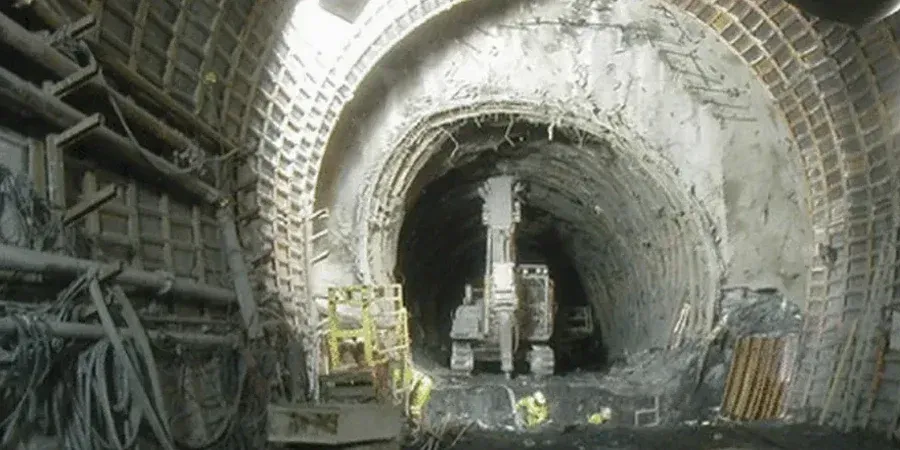
The types of projects that trigger the need for this specialized expertise are diverse and growing throughout the Greater Birmingham area. The city's ongoing efforts to address combined sewer overflows (CSOs) have driven the construction of large-diameter storage and conveyance tunnels at significant depth, often requiring tunnel boring machines (TBMs) to navigate through both rock and mixed-face conditions. Similarly, the densification of the medical district and downtown core sees deep excavations for building basements, parking garages, and utility vaults squeezed between historic structures. Every one of these projects, from a microtunnel installation for a new water line to a cut-and-cover transit station, relies on proactive risk management through continuous geotechnical excavation monitoring to validate design assumptions, detect unexpected ground movements, and safeguard the substantial investment in Birmingham's underground future.
The main risks stem from the highly variable weathered rock profile, where hard limestone can transition to soft, squeezing shale or soil-like saprolite within a few feet. This creates potential for sudden face instability, groundwater inflows from solution cavities in carbonate rocks, and excessive settlement at the surface. Managing the interface between residual soils and fractured bedrock is a constant challenge requiring adaptive excavation and support methods.
A comprehensive geotechnical investigation is legally mandated by OSHA 29 CFR 1926 Subpart S for all underground construction. It is the basis for the required written safety program and the registered engineer's design of support systems. Local building permits also require sealed geotechnical reports that classify the site's soil and rock according to the conditions that will be encountered during excavation.
In competent rock, design focuses on stabilizing wedges and blocks with rock bolts and shotcrete, managing minimal deformation. For soft soil tunnels in Birmingham's thick residual clays, the design must control ground loss at the face, limit large-scale settlement, and provide continuous, often pressurized, face support and a flexible lining that can accommodate squeezing ground conditions before a final rigid liner is installed.
Monitoring is the primary risk-control tool, providing real-time data to verify that the excavation is performing as designed and to protect adjacent structures. Instrumentation like inclinometers, extensometers, and settlement points tracks ground deformation, while vibration monitors safeguard sensitive equipment. This data allows the construction team to trigger contingency plans immediately if movements exceed predefined, engineer-established threshold limits.
We serve projects across Birmingham Alabama and surrounding areas.