Together, we solve the challenges of tomorrow.
LEARN MORE →In-situ testing forms the backbone of reliable geotechnical engineering in Birmingham, Alabama, providing engineers with direct measurements of soil and rock properties without the disturbance inherent in laboratory sampling. This category encompasses a broad spectrum of field investigations—from strength and deformation assessments to permeability and density evaluations—all performed on site to capture the true behavior of subsurface materials under natural conditions. In a city where the legacy of steel, mining, and Appalachian Piedmont geology converge, understanding the ground in its undisturbed state is not merely a technical preference but a necessity for safe and economical design.
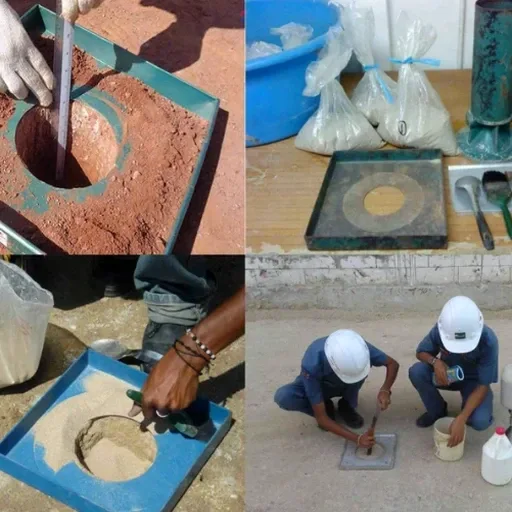
Birmingham's geology is dominated by the Valley and Ridge physiographic province, characterized by folded and faulted sedimentary rocks—limestones, dolomites, shales, and sandstones—overlain by residual silts and clays derived from weathering of these formations. The region is notorious for karst features in the Cambrian-Ordovician Knox Group, where solution cavities and sinkholes can develop unpredictably, while expansive clay soils in the Conasauga Formation pose volumetric stability challenges. These conditions demand rigorous field density testing using the sand cone method to verify compaction in engineered fills, as well as cone penetration tests and pressuremeter tests to delineate soft zones and cavities that could compromise foundations or trigger subsidence.
Regulatory compliance in Alabama is governed primarily by the Alabama Department of Environmental Management (ADEM) and the Alabama Building Commission, which reference the International Building Code (IBC) with state-specific amendments. Geotechnical investigations for public infrastructure must adhere to the Alabama Department of Transportation (ALDOT) Standard Specifications, which mandate in-situ testing protocols such as Standard Penetration Tests (SPT) per ASTM D1586 and field density tests per ASTM D1556. The American Society of Civil Engineers (ASCE) 7 standard for minimum design loads is also enforced locally, requiring site-specific shear wave velocity measurements—often obtained through seismic cone penetration testing (SCPTu)—to classify seismic site class, a critical factor given Birmingham's proximity to the New Madrid and Eastern Tennessee seismic zones.
Projects that routinely require in-situ testing in the Birmingham metro area include high-rise developments in the Five Points South and downtown districts, where deep excavations in residual soils demand real-time monitoring of lateral earth pressures and groundwater conditions. Transportation infrastructure—from the I-59/I-20 corridor improvements to industrial access roads in the Birmingham-Jefferson County Port complex—relies on plate load tests and lightweight deflectometer surveys to validate pavement subgrade modulus. Industrial facilities in the nearby McCalla and Bessemer areas, often sited on reclaimed mine lands, necessitate comprehensive in-situ campaigns involving piezocone penetration tests (CPTu) to assess liquefaction potential and monitor groundwater quality in compliance with ADEM's solid waste and remediation regulations.
In-situ testing measures soil and rock properties directly in the field at their natural location, preserving factors like stress state, moisture content, and structure that are altered during sampling and transport. Unlike laboratory tests on disturbed or undisturbed samples, methods such as cone penetration testing (CPT), pressuremeter tests, and field density tests provide continuous profiles and immediate results, capturing heterogeneities like fissures or cavities that discrete samples often miss. This real-time data allows engineers to adjust exploration programs dynamically and base designs on conditions that better represent actual ground behavior.
In Birmingham, the Standard Penetration Test (SPT) remains a staple for soil classification and preliminary bearing capacity, often paired with cone penetration tests (CPTu) for detailed stratigraphy and liquefaction assessment in the Coastal Plain sediments south of the city. Field density tests using the sand cone method are mandatory for compacted fill verification under ALDOT and IBC specifications, while seismic dilatometer or crosshole tests are specified for seismic site classification in accordance with ASCE 7. Pressuremeter tests are frequently deployed in karst-prone areas to evaluate rock mass modulus and detect voids.
Birmingham's folded and faulted sedimentary bedrock, residual soils, and karst topography dictate testing strategies that can detect abrupt lateral changes and voids. In areas underlain by the Knox Group dolomites, electrical resistivity imaging may supplement cone penetration tests to locate cavities, while in expansive clays of the Conasauga Formation, pressuremeter and dilatometer tests are preferred to measure in-situ stress and deformation moduli. The steep terrain of Red Mountain often requires downhole seismic methods to assess rock rippability and slope stability, directly addressing the geohazards unique to the Ridge and Valley province.
In-situ testing in Alabama follows ASTM International standards, with ASTM D1586 for SPT, ASTM D5778 for CPT, and ASTM D1556 for sand cone density testing being the most referenced. The Alabama Department of Transportation (ALDOT) Standard Specifications for Highway Construction provide additional requirements for transportation projects, including specific blow count corrections and acceptance criteria for embankment density. The International Building Code, as adopted by the State of Alabama, mandates site-specific investigations per Section 1803, while ADEM regulates environmental testing such as hydraulic conductivity measurements for waste containment and groundwater monitoring.
We serve projects across Birmingham Alabama and surrounding areas.