Together, we solve the challenges of tomorrow.
LEARN MORE →Geotechnical laboratory testing in Birmingham, Alabama, forms the analytical backbone of subsurface investigation, transforming field samples into quantifiable engineering parameters. This category encompasses the physical, mechanical, and chemical evaluation of soil and rock specimens recovered from borings, test pits, and excavations across the region. For engineers and contractors operating in the Magic City, laboratory data is not a supplement to field observation—it is the definitive basis for foundation design, slope stability analysis, earthwork specifications, and environmental compliance. Without rigorous lab testing, assumptions about bearing capacity, settlement potential, or drainage characteristics remain speculative, introducing unacceptable risk into civil and structural projects.
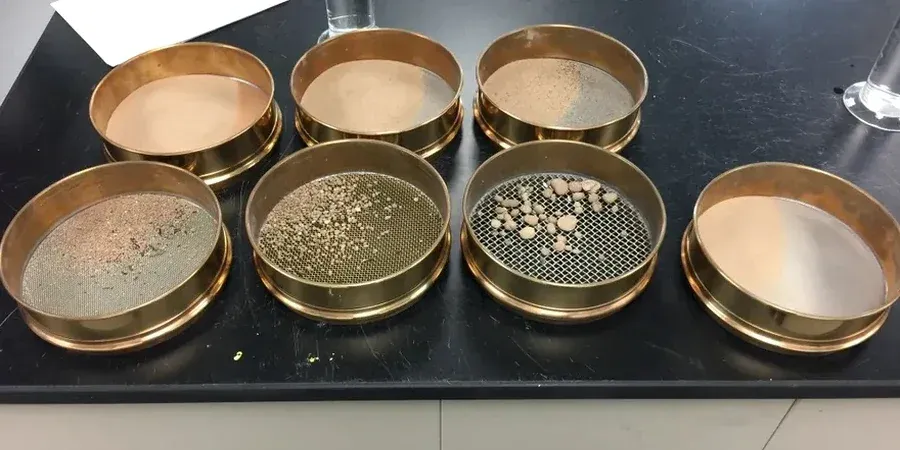
Birmingham's geological setting demands particular attention in the laboratory due to the complex transition between the Valley and Ridge physiographic province and the Cumberland Plateau. Residual soils derived from the weathering of shale, sandstone, and limestone of the Pottsville and Chickamauga formations dominate the shallow subsurface. These materials often exhibit significant spatial variability, with completely decomposed rock grades transitioning abruptly into competent bedrock. A standard penetration test alone cannot reliably differentiate between stiff residual clay and weathered shale; this is where a full laboratory program—including grain size analysis (sieve + hydrometer)—becomes essential. The presence of expansive clays within the Conasauga Group and the potential for collapsible soils in alluvial deposits along Village Creek and Valley Creek further underscore why index property testing is non-negotiable for Birmingham projects.
Regulatory compliance in Alabama ties directly to the Alabama Department of Environmental Management (ADEM) and the Alabama Department of Transportation (ALDOT) Standard Specifications for Highway Construction. ALDOT Section 200 through 400 mandates specific laboratory protocols including AASHTO T 88 for particle size distribution, AASHTO T 89 and T 90 for Atterberg limits, and AASHTO T 99 or T 180 for moisture-density relationships. The International Building Code (IBC), adopted statewide with local amendments by the City of Birmingham, requires geotechnical reports to include laboratory-derived shear strength parameters and consolidation characteristics when structures exceed certain risk categories. Environmental site assessments under ADEM's Division 335-6 additionally require laboratory analysis of soil and groundwater for regulated constituents, making chemical testing an integral part of the laboratory service category.
The types of projects that rely on Birmingham geotechnical laboratories span the full spectrum of development. Commercial high-rises in the Central Business District require consolidation and triaxial shear testing to design deep foundations within the limestone pinnacle-prone subsurface. Public infrastructure such as the Birmingham Northern Beltline and I-59/20 bridge replacements demands complete laboratory characterization of borrow materials and subgrade soils. Industrial facilities in the Ensley and North Birmingham areas, often sited on legacy slag and fill, need laboratory validation of compaction and chemical stability. Even residential subdivisions in suburbs like Hoover and Vestavia Hills benefit from swell-consolidation testing and permeability assessments to prevent foundation distress and drainage failures. Each project type leverages laboratory data differently, but all share the common requirement for defensible, reproducible results that satisfy both design engineers and reviewing agencies.
A standard program includes moisture content, unit weight, grain size distribution via sieve and hydrometer to classify fine-grained soils, Atterberg limits to assess plasticity, and compaction testing per ALDOT methods. Depending on project scope, direct shear, triaxial compression, consolidation, and permeability tests may be added. The lab selection should address the specific geological units encountered—particularly residual soils from shale and limestone weathering common to Jefferson County.
Turnaround varies by test type and lab workload. Basic index tests such as moisture content, Atterberg limits, and sieve analyses can be completed within three to five business days. Consolidation tests require one to two weeks due to incremental loading schedules. Specialty tests like triaxial shear or permeability may extend to three weeks. Rush processing is often available for time-sensitive projects, but scheduling in advance with the laboratory is recommended.
Yes. Laboratories performing work for ALDOT projects must maintain AASHTO accreditation through the AASHTO re:source program, which includes proficiency sample testing and on-site assessments. ASTM D3740 provides the minimum standard of care for geotechnical testing agencies. Additionally, labs involved in environmental or construction materials testing often hold ISO/IEC 17025 accreditation. Always verify that the laboratory's certifications align with the regulatory requirements of your specific project.
Atterberg limits are essential for identifying expansive potential—high liquid limit and plasticity index values indicate shrink-swell risk. Particle size analysis confirms the clay fraction percentage. Consolidation-swell testing under ASTM D4546 provides quantitative swell pressure and percent swell data needed for foundation design. Supplemental testing such as suction measurements or chemical stabilization trials may be warranted for highly plastic soils derived from the Conasauga Group or weathered limestone residuum.
We serve projects across Birmingham Alabama and surrounding areas.