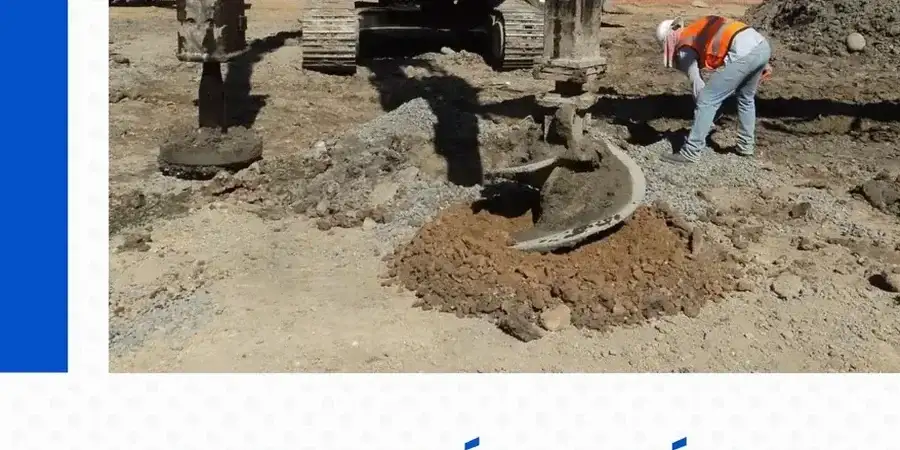
Drive five miles from downtown Birmingham toward the old mining cuts in Red Mountain and the soil profile shifts completely. Downtown near the BJCC you hit stiff residual clays and weathered shale, but move south into the alluvial deposits along Valley Creek and suddenly you are dealing with 15 to 25 feet of soft, compressible silts. That contrast is exactly why stone column design in Birmingham Alabama cannot be a one-size-fits-all approach. A warehouse slab in Homewood on Piedmont-derived clay needs a different compaction strategy than a tank foundation in Oxmoor Valley sitting on loose valley fill. We regularly pair site-specific SPT blow counts with CPT testing to map the soft zones before selecting column diameter and spacing, because guessing wrong in these transition-zone soils means differential settlement you will chase for years.
On Birmingham's valley fills, stone column performance depends less on column diameter and more on accurately locating the bottom of the soft zone.