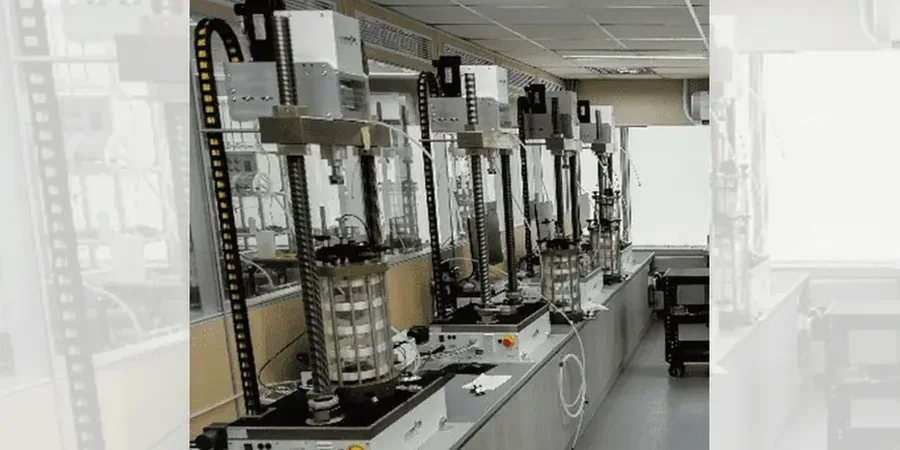
The Birmingham metro area, situated within the Valley and Ridge province where folded Paleozoic sedimentary rocks underlie variable residual soils, demands a rigorous approach to shear strength determination. ASTM D4767 and D2850 provide the framework for consolidated-undrained and unconsolidated-undrained triaxial tests that capture the effective stress parameters essential for foundation design on these weathered materials. The region's characteristic red clay soils, derived from limestone and shale weathering, exhibit strength properties that cannot be reliably estimated from index tests alone, particularly when evaluating cut slopes along the Red Mountain expressway corridor or deep excavations in the downtown Birmingham district. Our laboratory applies back-pressure saturation and strain-controlled loading to produce failure envelopes that reflect the true in-situ stress history of the Birmingham subsurface, eliminating the guesswork that often leads to overly conservative or unsafe designs.
A single consolidated-undrained triaxial test with pore pressure measurement reveals more about a residual soil's behavior than two dozen index tests performed on disturbed samples.